


"And the Word became flesh..."
Sacred art has been a part of the Church's mission in proclaiming the Gospel from it's infancy.
And yet why was it banned by Emperor Leo III in 726 A.D., then again in 815 A.D. by Emperor Leo V and then a 3rd time Iconoclasm erupted during the Protestant Reformation?
Repainting the Vilnius Divine Mercy Image with New Rays 2026
The Iconoclast Controversy & the 7th Council of Nicaea
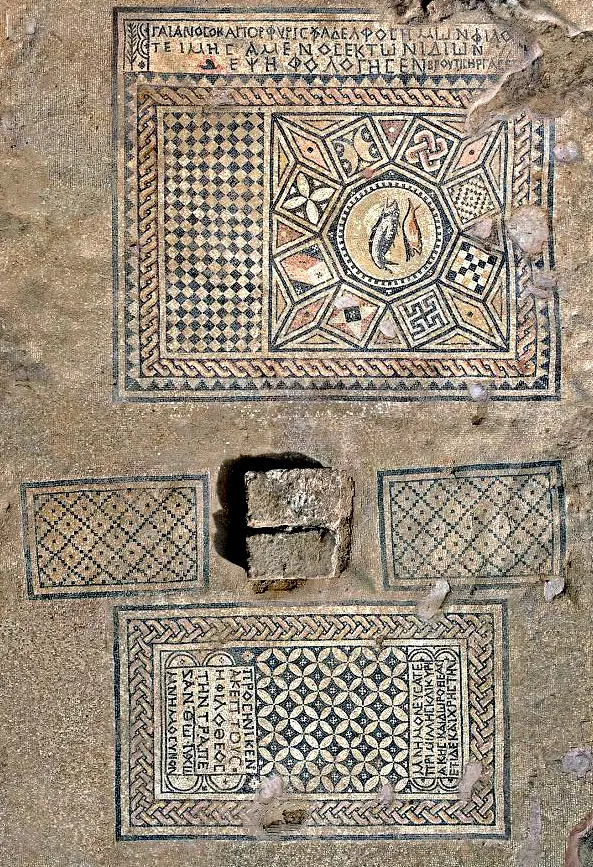
Photograph is of the 230 A.D. Megiddo worship chapel’s mosaic floor panels and Eucharistic Communion table base including the words in Greek addressing Jesus as God. Photo by Niki Davidov / Israel Antiquities Authority.
In the 8th, 9th and 16th centuries, the Church faced the 'Iconoclast' controversy—a movement that sought to destroy all sacred images, claiming they were idols.
The Church definitively answered this at the Seventh Ecumenical Council of Nicaea in 787 AD. The Council fathers declared that sacred images of Christ, Mary, the angels, and the saints are not only permissible but vital to the Christian faith.
By defending sacred art, the Church was actually defending the reality of the Incarnation itself: that Jesus was a real man with a real, depictable face."
-
- We do not worship the artwork: 'The honor paid to sacred images is a respectful veneration, not the adoration due to God alone' (CCC 2132).
- The honor passes to the prototype: When we show reverence to an icon or a sculpture, we are not reverencing wood, paint, or marble. The respect we show the image is transferred directly to the holy person it represents.
- Sacred art serves as a window to heaven: Sacred art is a tool that lifts our minds to God, never a replacement for Him."
The role of sacred art in the life of the faithful transcends mere aesthetics. Sacred images serve not as an end in themselves.
Rather, sacred art is meant to direct heart and mind beyond the physical image to the invisible transcendental realities that are bound up in love and are ordered to relationship in the Godhead.
And what's more, it is not in the beauty of the color, nor of the brush lies the greatness of sacred images but by God’s grace as we are drawn to prayer with the heart in communion with the One who first loved us.
What is sacred art and what is it's purpose?
Sacred art goes beyond decoration and what is visually pleasing to the eye. It makes more than a theological statement.
It serves as a visible instrument. Like a window through which sunlight flows, so too through sacred images the grace of God flows enticing the soul:
- To open the heart to the sense of the eternal, and Heavenly desires
- To receive and accept God’s grace and give a more earnest answer to His call.
- To respond with heart and mind lifted up in prayer.
Genuine sacred art points the viewer beyond itself to the invisible beauty of truth and goodness bound together by love. Beauty is the last thing which the thinking intellect dares to approach, since only it dances as an uncontained splendor around the true, the good, and the love that binds their inseparable relation to one another. (1)
Beauty, according to St. Thomas Aquinas, is “that which being seen pleases.”(2) By being seen he means an intuitive knowledge that is closely linked to truth, and by that which pleases he means delight grounded in reality and goodness itself. Here again, beauty, truth, and goodness are attested as the inseparable, Trinitarian transcendentals.
And in its highest regard, “once we touch a transcendental, we touch Being itself … all that ennobles and makes the joy of life: we enter the realm of the spirit.” (3)
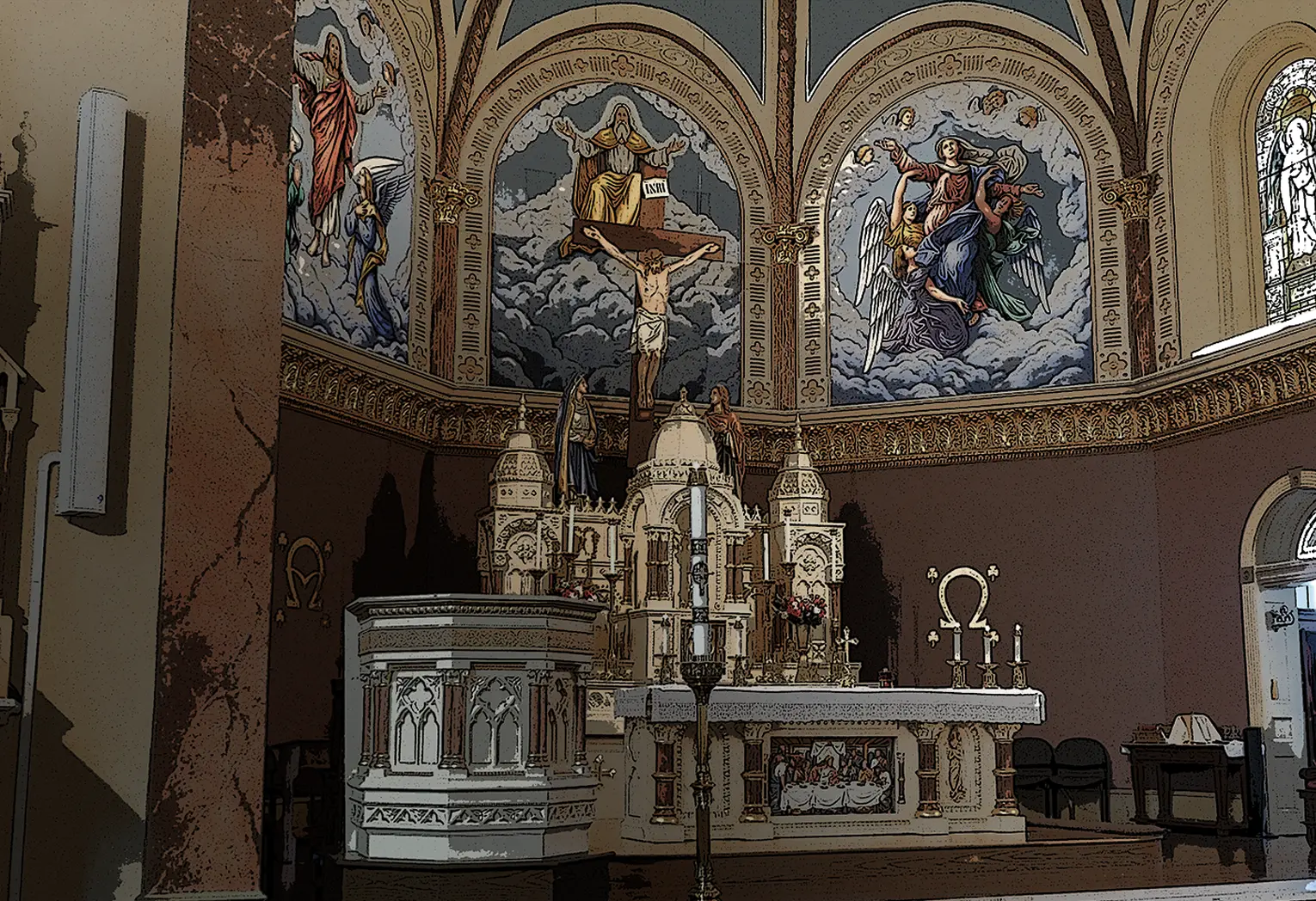
For the Producers of Sacred Art:
Sacred art meets its true vocation when inspired and flowing from a life of prayer and fasting.
It is true that God uses sacred art that has come to us from those whose lifestyles were immoral and whose motivation was the desire to please themselves, their patrons, and/or to financially profit by it.
Sacred images do have spiritual value and some can motivate the viewer to prayer and communion with God.
However, sacred art should be made by artists who practice the Catholic faith.
By actively participating in a plan of daily life that includes the Holy Mass, the praying of the full Rosary while meditating on its Sacred Mysteries, the reading of Sacred Scripture & the lives of the saints allows for God's greater inspiration and influence in the creation of future works of sacred art.
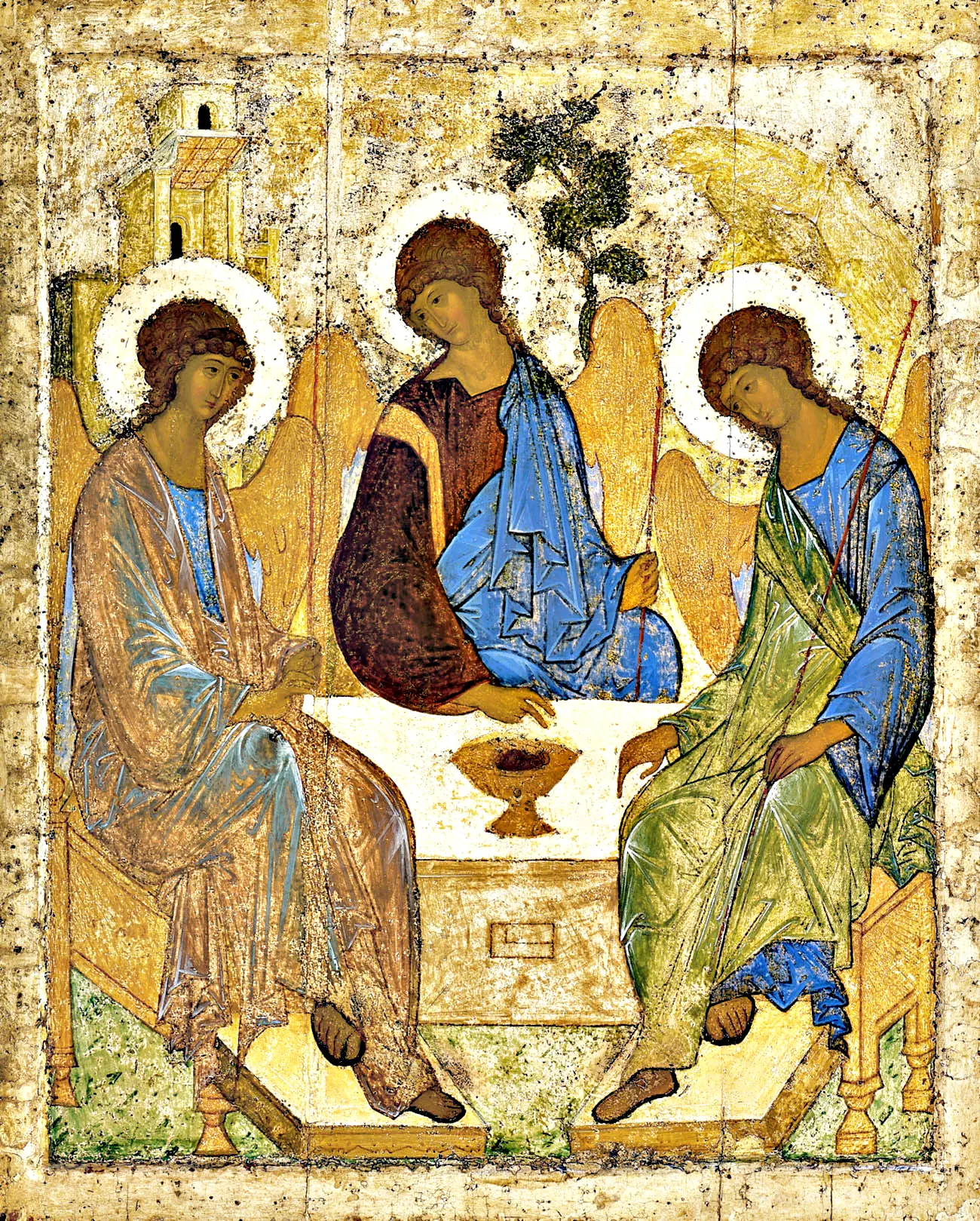
As an example, certain monastic Christian iconographers have maintained a tradition of keeping Lectio Divina with Visio Divina. Therefore, we will be presenting an examination series on Christian iconography in the Byzantine style.
BELOW IS AN ICON OF THE MOST HOLY TRINITY BY ARTIST ANDREI RUBLEV, MONK AND ICONOGRAPHER
MORE TO COME!
JP II Sacred Art Ministry Newsletter
Subscribe to our newsletter to find out about up coming featured sacred art & ethos.